What the sleep hygiene audit does
Ten short questions cover the habits that most affect sleep: wake time, morning light, caffeine, alcohol, screens, the bedroom, bed use, exercise timing, meals and naps. Each answer scores zero, one or two. The tool adds them up, gives a grade and lists the three weakest areas first.
The audit is based on common recommendations from sleep medicine bodies such as the National Sleep Foundation and the CDC. It does not diagnose anything, and a perfect score does not guarantee perfect sleep.
Why sleep hygiene works
Sleep is driven by two forces: pressure that builds with time awake, and a body clock tied to light. Good habits strengthen both. A fixed wake time and morning light anchor the clock, while late caffeine, alcohol, bright screens and heavy meals work against it.
Hirshkowitz and the National Sleep Foundation panel and Ohayon and colleagues describe sleep quality measures such as falling asleep within 30 minutes and waking no more than once. The aim of the audit is to move you toward those markers.
Light and timing
Morning light tells the brain it is day. Evening light, especially bright and blue rich light, can delay the body clock. Use the blue light taper timer to plan your screen dimming, and read natural light and the body clock to understand the timing.
Caffeine, alcohol and nicotine
- Caffeine lingers for hours. Check yours with the caffeine half life calculator
- Alcohol may speed sleep onset but fragments the second half of the night. See the alcohol sleep calculator
- Nicotine is a stimulant. See the nicotine bedtime estimator
The bedroom
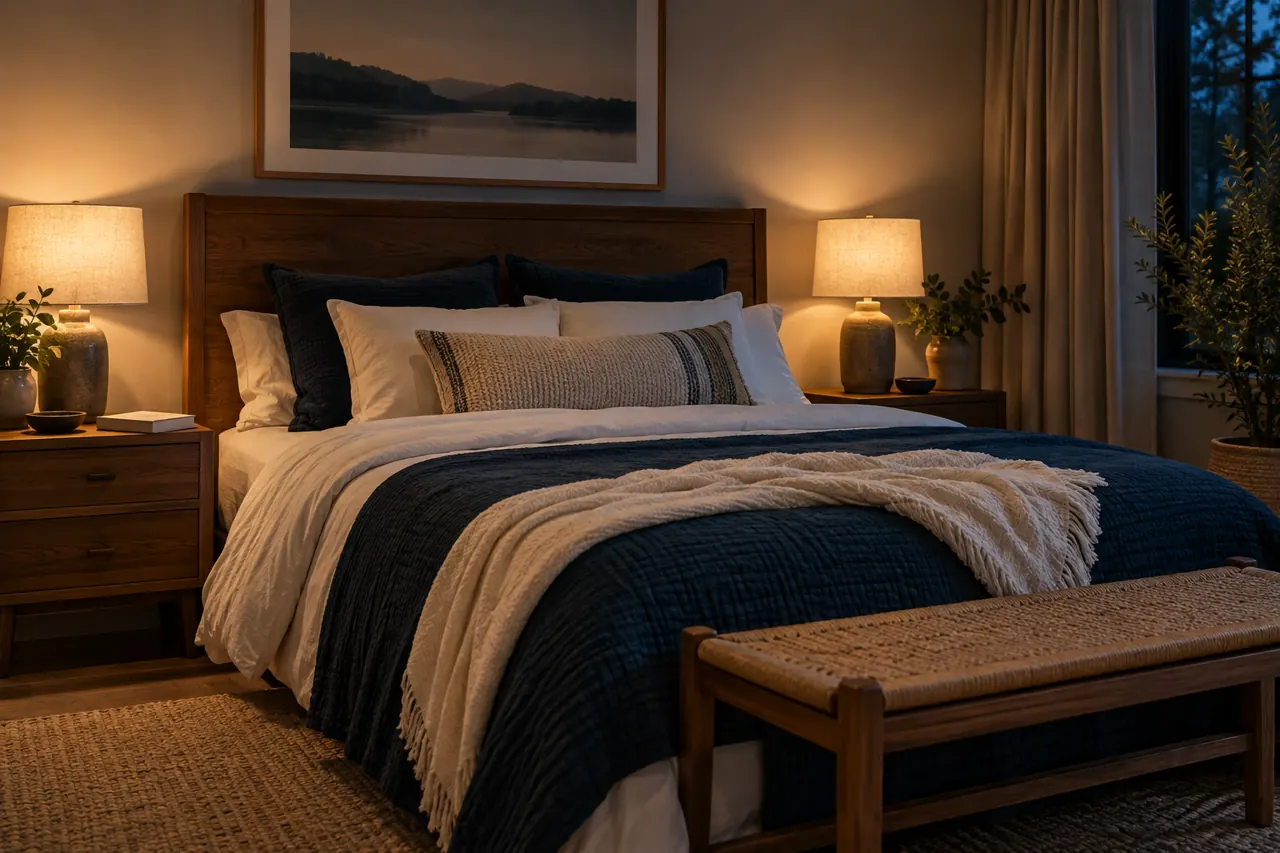
A cool, dark, quiet room helps. Check the temperature with the bedroom temperature gauge, block light with curtains or a mask and mask noise with the sleep sound mixer. Keep the bed for sleep so your brain links it with rest.
Food, exercise and naps
Heavy meals close to bed can trigger reflux. Use the meal curfew calculator. Hard exercise is best finished a few hours before bed. The post workout sleep optimizer helps. Keep naps short, as discussed in the nap calculator.
Build a wind down routine
- Set a fixed wake time and calculate bedtime from it with the bedtime calculator.
- Dim lights an hour before bed.
- Do something calm, such as reading or stretching.
- Write tomorrow's tasks in the mind dump journal.
- Go to bed when sleepy and keep the same time on weekends.
When habits are not enough
If you follow good habits and still cannot sleep for weeks, or you snore, gasp or feel very sleepy in the day, speak to a doctor. Cognitive behavioural therapy for insomnia and testing for sleep apnoea go beyond hygiene. See how to sleep when you have insomnia and the sleep hygiene checklist.
How to read your score
A score of 17 to 20 means your habits are strong. 13 to 16 is good with a few gaps. 8 to 12 is fair, and under 8 means several habits are working against you.
Do not try to fix everything in one week. Choose the weakest three items, change one at a time for a few days each and retest after a month. A steady wake time and morning light usually give the biggest return.
Frequently Asked Questions
What is sleep hygiene? ›
It is the set of habits and bedroom conditions that support regular, good quality sleep.
What is the most important sleep hygiene habit? ›
A steady wake time every day, because it anchors your body clock.
Does sleep hygiene cure insomnia? ›
It helps many people but often is not enough for insomnia disorder. Cognitive behavioural therapy for insomnia is the first line treatment.
How long before bed should I stop screens? ›
About an hour is a common recommendation.
Is the audit a medical test? ›
No. It is a simple habit check.
How often should I repeat it? ›
Every month or two, or after a change in your routine.
Written by F.A and last updated on 5 November 2026. Claims are checked against the peer reviewed papers and public health sources listed below, and findings from small or early studies are labelled as such. We follow our editorial policy and explain how times and results are calculated in our methodology. Calculators run in your browser and store nothing. Found an error? Tell us and we will correct it.
Sources
- Hirshkowitz M et al. National Sleep Foundation's sleep time duration recommendations. Sleep Health 2015
- Ohayon M et al. National Sleep Foundation's sleep quality recommendations: first report. Sleep Health 2017
- CDC. About sleep
- Watson NF et al. Recommended amount of sleep for a healthy adult. Sleep 2015
This page gives general information for adults and is not medical advice. If you have ongoing sleep problems, loud snoring, breathing pauses or heavy daytime sleepiness, speak to a doctor. Times and results are estimates.