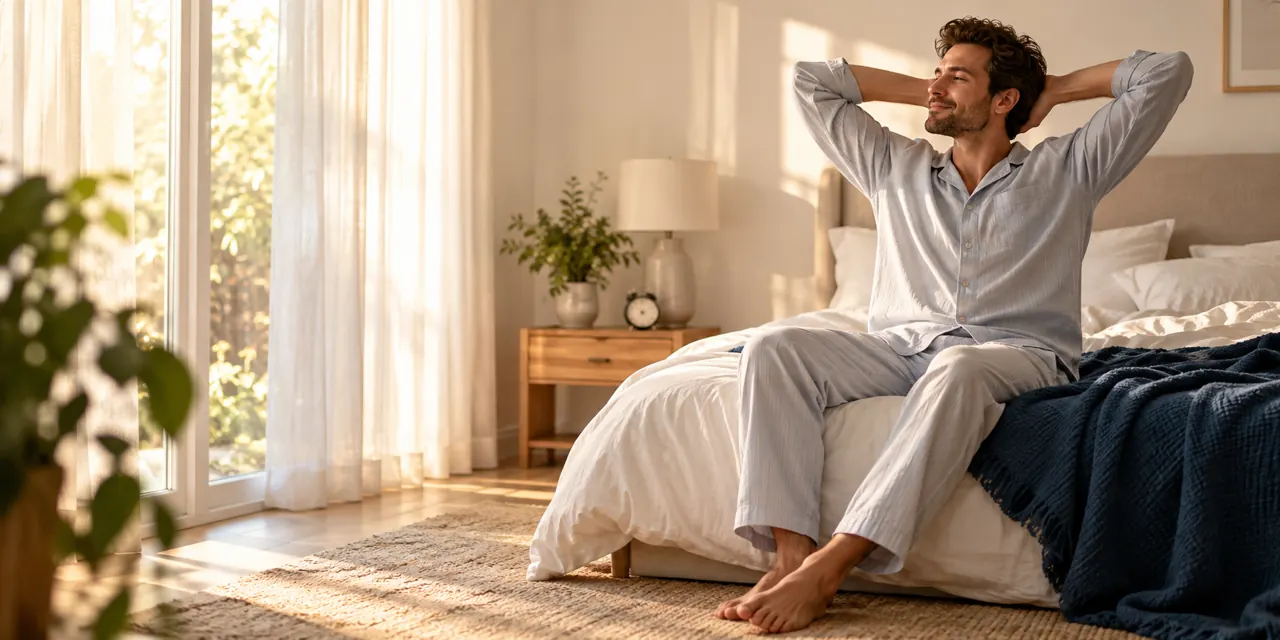
How light sets your body clock
A cluster of cells in the brain acts as the master clock. It runs a little longer than 24 hours, so it must be reset each day. The main reset signal is light that enters the eye, especially bright morning light, which tells the clock that the day has started.
Light in the evening and at night pushes the clock later. This is why a bright phone at midnight can make it harder to sleep, and why a person who stays in dim rooms all day may feel groggy at the wrong time.
The camping study
Wright and colleagues studied eight people living in the Colorado Rockies in summer. After a week with natural light only, their melatonin rose about two hours earlier compared with their normal week of electric light. Their body clocks lined up closely with sunrise and sunset.
A later paper from the same group found that a weekend camping trip also moved the clock earlier, and that people who stay up late gained the most. The sample was small, but the idea matches wider research on light and rhythms.
Why indoor life delays us
Modern homes and offices are dim by day and bright at night. Indoor light is often 100 to 500 lux, while outdoor daylight ranges from about 10,000 lux on a cloudy day to over 50,000 lux in full sun. So the clock gets weak daytime signals and strong evening signals, a pattern that tends to push sleep later.
That is why many people feel naturally late at night and find mornings painful, even if they have no sleep disorder.
A seven day natural light plan
- Get outside for 20 to 30 minutes within an hour of waking, with no sunglasses if safe.
- Eat breakfast near a window or outside.
- Take a short walk at lunch.
- Keep indoor lights low after sunset and use lamps.
- Use the blue light taper timer to wind screens down.
- Keep your wake time steady, even at the weekend.
- At the weekend, spend a few hours outdoors and avoid late screens.
If mornings are dark or you work nights
In winter at high latitudes, morning light can be weak. A light therapy lamp of 10,000 lux used for 20 to 30 minutes in the morning is a common option, but talk to your doctor if you have eye problems, bipolar disorder or take medicines that sensitise the skin.
Night workers can use bright light early in their shift and wear dark glasses on the way home to protect daytime sleep.
How bright is bright enough?
Brightness is measured in lux. A dim living room is about 50 to 200 lux, an office around 300 to 500, a cloudy day outdoors about 1,000 to 10,000 and bright sun above 50,000. The body clock responds to light intensity, timing and length of exposure, so 20 to 30 minutes outdoors gives far more than hours in a dim room.
You do not need to measure anything. If you can feel it is clearly brighter than the room you were in, it is likely helping.
Make the evening darker
Dimming the home an hour or two before bed is the other half of the reset. Use lamps, warm bulbs and the night mode on screens, and keep bright overhead lights off. The blue light taper timer gives clock times for your own bedtime.
In the bedroom, keep it dark. Blackout curtains, an eye mask or covering small standby lights helps deep sleep.
Using light after travel
After a flight east, morning light helps you shift earlier. After a flight west, light in the late afternoon helps you stay up later. Avoid bright light at the wrong time, which can push the clock the wrong way. Our jet lag recovery planner gives a day by day light plan.
The same timing rule works for shift work and for people who simply want to move their sleep a little earlier.
Safety and limits
Never stare at the sun. Light therapy is not a treatment for all sleep problems, and some people with eye disease, bipolar disorder or sensitivity to light should check with a doctor first. If you have severe sleep problems or low mood, medical care comes first.
Frequently Asked Questions
How long does it take to reset the body clock with light? ›
Many people notice a change within a few days, and the camping study found a shift in a week.
Does cloudy light still work? ›
Yes. Outdoor light on a cloudy day is far brighter than indoor light.
Should I wear sunglasses in the morning? ›
If safe, skip them for the first 20 to 30 minutes to get the light signal.
Do I need a light box? ›
Not unless you have little daylight. Many people do well with a morning walk.
Will this help jet lag? ›
Yes. Timing light well is the main tool for jet lag.
Is evening light really that bad? ›
Bright light late in the evening can delay sleep, so dim the lights.
Written by F.A and last updated on 5 November 2026. Claims are checked against the peer reviewed papers and public health sources listed below, and findings from small or early studies are labelled as such. We follow our editorial policy and explain how times and results are calculated in our methodology. Calculators run in your browser and store nothing. Found an error? Tell us and we will correct it.
Sources
- Wright KP Jr et al. Entrainment of the human circadian clock to the natural light dark cycle. Curr Biol 2013
- Stothard ER et al. Circadian entrainment to the natural light dark cycle across seasons and the weekend. Curr Biol 2017
- Chang AM et al. Evening use of light emitting eReaders negatively affects sleep, circadian timing, and next morning alertness. PNAS 2015
- Hirshkowitz M et al. National Sleep Foundation's sleep time duration recommendations. Sleep Health 2015
This page gives general information for adults and is not medical advice. If you have ongoing sleep problems, loud snoring, breathing pauses or heavy daytime sleepiness, speak to a doctor. Times and results are estimates.