Why sleep is harder away from home
Strange beds, noise, light, temperature and a different time zone all affect sleep. People often sleep lighter on the first night in a new place. Travel also disrupts meal times, exercise and routine, which anchor the body clock.
A small kit and a simple plan go a long way.
What to pack
- A comfortable sleep mask that blocks light without pressure on the eyes
- Soft earplugs or noise cancelling headphones
- A travel pillow that suits your style
- A light layer or scarf for cabin or hotel temperature
- A small power bank and a basic alarm
- Water and a small healthy snack
- Your regular wind down item, such as a book
What a sleep mask does
A mask blocks light, which helps you fall asleep in the day, on a plane or in a bright hotel. Light is the strongest clock signal, so keeping the eyes dark in your target sleep period supports your plan. Choose a contoured or soft mask you can wear for hours.
A mask does not change your clock by itself. Timed daylight does that.
Jet lag in brief
When you cross time zones, the body clock lags behind local time. Waterhouse and colleagues describe using light, timed sleep and sometimes melatonin to help adjust. A common rule is to seek morning light when flying east and evening light when flying west, and to avoid light at the wrong time. See our jet lag recovery planner and long haul flight sleep calculator.
Talk to a doctor before using melatonin, particularly if you take other medicines.
Sleeping better in hotels
- Ask for a quiet room away from lifts and ice machines.
- Set the room cool and block light gaps with the mask or a clip.
- Bring a familiar scent or sound.
- Keep your usual bedtime routine.
- Avoid heavy meals and alcohol late.
- Get daylight outdoors the next morning.
Shopping notes
The market for travel sleep accessories is growing, but market reports tell you about sales and not about sleep benefits, so we do not use their figures here. Judge accessories by comfort, fit and your own trial. This page is general education and not medical advice. If you have ongoing sleep problems, loud snoring, breathing pauses or severe daytime sleepiness, speak to a doctor.
Sleeping on a plane
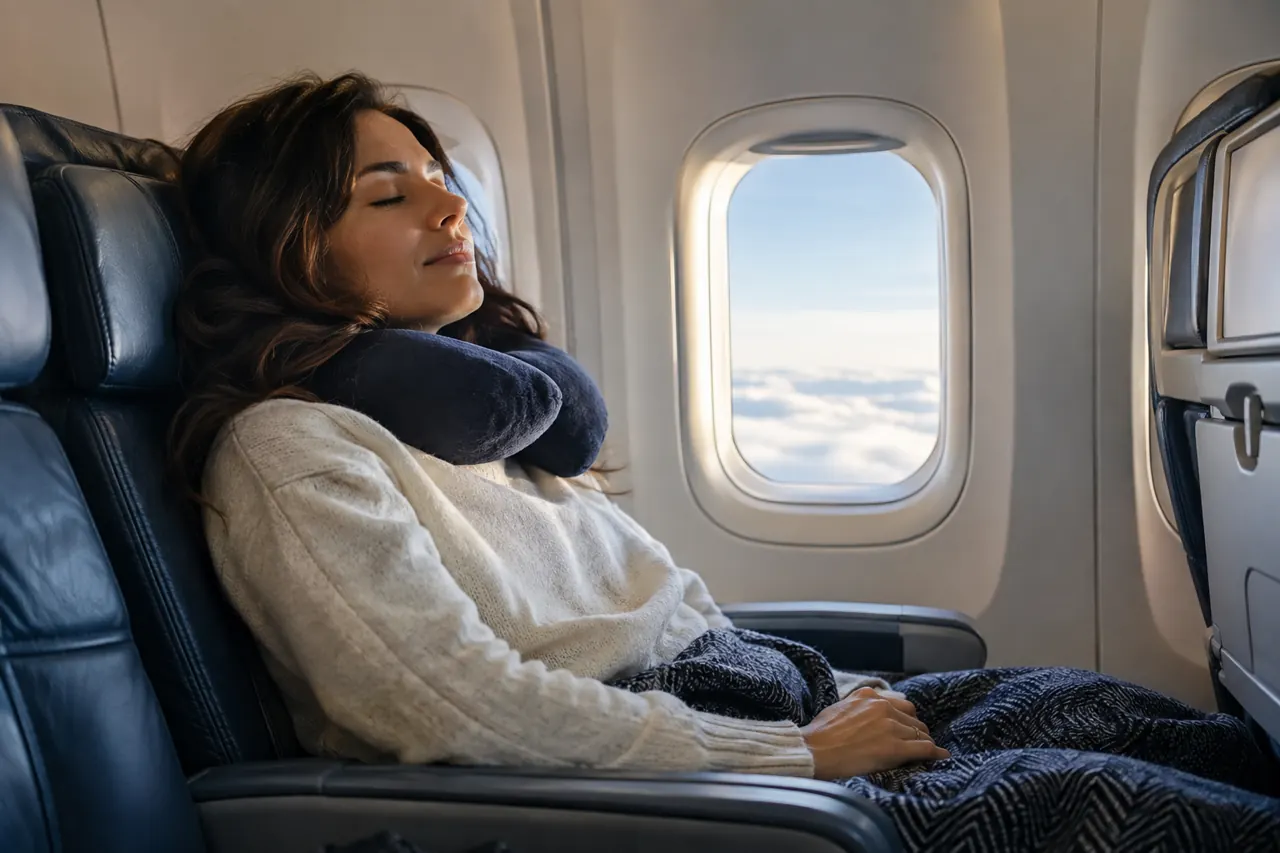
Choose a window seat if you want to lean on the wall. Wear loose clothes and use a neck support that suits you. Eat lightly, drink water and skip heavy alcohol. Set your watch to the destination time and try to sleep when it is night there.
The long haul flight calculator works out the best sleep window for your route.
Coming home
Return trips need a plan too. Keep your wake time close to your normal one for the first morning, get outdoor light, and avoid long naps. A short nap of 20 minutes can carry you to a normal bedtime.
Give yourself a few easy days where you can. Most people settle in within a week.
Short trips and weekends away
For trips of a few days, it is often easier to keep your home sleep schedule than to adjust to local time. Plan important meetings around your best hours. Keep a regular wake time, get daylight and avoid late nights.
The DST sleep calculator and travel pages on this site give extra planning help.
Travelling with children
Children can struggle with new places. Bring a familiar blanket or toy that is safe for their age, keep bedtime routines, and use a travel cot that meets safety standards for babies. Follow the rules in the safe infant sleep guide.
Block light with portable blackout covers if needed.
Bottom line
A good kit costs little: a mask, earplugs, a neck support and a plan for light. Add a steady routine, water and sensible eating, and most trips become easier. For large time changes, use a day by day plan and give your body time.
Check the tools on this site before you fly to plan your sleep windows.
Frequently Asked Questions
Do sleep masks work? ›
They block light, which helps many people fall asleep.
Are earplugs safe? ›
Foam earplugs are safe for most people when used correctly. Keep your alarm audible.
How do I beat jet lag? ›
Use timed light, shift sleep gradually and keep to local time.
Does melatonin help jet lag? ›
It can for some, so ask a doctor.
What should I avoid on a night flight? ›
Heavy alcohol and caffeine near sleep.
How long to adjust? ›
Roughly one day per hour of time difference, varying by direction.
Written by F.A and last updated on 5 November 2026. Claims are checked against the peer reviewed papers and public health sources listed below, and findings from small or early studies are labelled as such. We follow our editorial policy and explain how times and results are calculated in our methodology. Calculators run in your browser and store nothing. Found an error? Tell us and we will correct it.
Sources
- Waterhouse J et al. Jet lag: trends and coping strategies. Lancet 2007
- Duffy JF, Czeisler CA. Effect of light on human circadian physiology. Sleep Med Clin 2009
- Hirshkowitz M et al. National Sleep Foundation's sleep time duration recommendations. Sleep Health 2015
This page gives general information for adults and is not medical advice. If you have ongoing sleep problems, loud snoring, breathing pauses or heavy daytime sleepiness, speak to a doctor. Times and results are estimates.