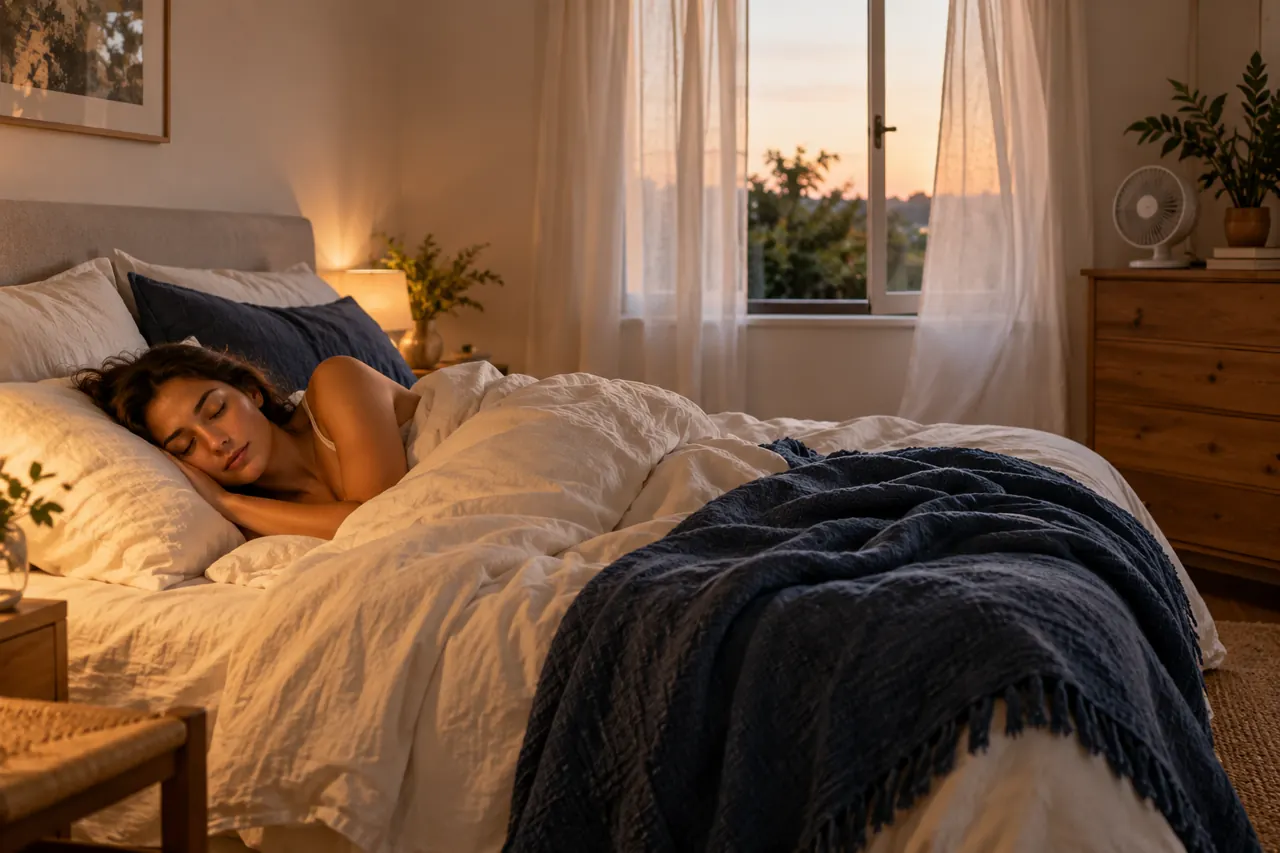
What the tog selector does
You enter your bedroom temperature, how warm you usually sleep, what you wear and whether you share the bed. The selector scores the situation and suggests a duvet tog, a fabric and a sleepwear tip.
It is a quick guide. Your own comfort always comes first, and you can adjust with a spare blanket.
What tog means
Tog is a UK unit of thermal resistance used on duvets. A low tog is light and cool, and a high tog is thick and warm. Shops usually sell 4.5 tog for summer, 7.5 to 10.5 for spring and autumn and 13.5 for winter. These bands are retail conventions. Many people use a 10.5 duvet all year or buy a combined set.
In the United States, duvets are described by fill weight and season. Use the same idea: light for warm rooms and heavy for cold rooms.
Why bedding matters for sleep
Okamoto Mizuno and Mizuno describe how a hot or cold sleeping environment changes sleep stages and body temperature, with heat usually raising wakefulness and reducing deep and REM sleep. Their later work with low air temperatures found that bedding and sleepwear help protect sleep in the cold.
The skin under the covers behaves like a small climate zone. Getting that right can matter as much as the room thermostat. Check the room with the bedroom temperature gauge.
Choosing fabrics
- Cotton and linen breathe well in warm rooms
- Bamboo and Tencel feel cool and wick moisture
- Wool regulates temperature across seasons
- Flannel and brushed cotton feel warm in winter
- Synthetic fills can trap heat and moisture
Sleeping next to someone with different needs
Couples can use two single duvets on one bed, or one duvet with an extra blanket on the colder side. A fan on one side also helps. See sleep environment temperature.
If you sleep hot or sweat at night
Choose a lighter tog, breathable fabric and cooler sleepwear, and keep the room ventilated. Night sweats that soak the bed and come often need a medical check. See fix sleep with night sweats and why do I sweat at night.
Weighted blankets
Weighted blankets are popular for comfort but they add heat. Read weighted blanket sleep science for what research shows.
Babies and children
Babies need safe sleep clothing, not duvets or loose blankets. Follow the safe infant sleep guide. Children's needs differ, so check room temperature first.
Worked examples
A 14C bedroom in winter, with warm pyjamas and a person who runs cold, scores high and the selector suggests a 13.5 tog duvet with a wool or flannel layer. A 22C bedroom in early autumn with light sleepwear and a neutral sleeper lands on 7.5 tog.
In a 26C summer room with two people in the bed, the selector drops to 4.5 tog or a sheet only, since extra body heat adds to the load. If you are warm even then, use a fan and a cotton or linen sheet.
Caring for bedding so it keeps working
Wash covers weekly in warm water and duvets every few months according to the label. Damp or flat bedding insulates badly and can trigger allergies.
Air the bed in the morning by folding the duvet back for 20 minutes. If you suffer from dust mite allergy, choose washable synthetic fills and allergen proof covers, and speak to your doctor about treatment.
Frequently Asked Questions
What tog duvet should I use? ›
About 4.5 tog in summer, 7.5 to 10.5 in spring and autumn and 13.5 in winter, adjusted for your room and how warm you sleep.
What is a good bedroom temperature for sleep? ›
Roughly 15.6 to 19.4C (60 to 67F) for most adults.
Is a 10.5 tog good all year? ›
Many people use it year round with extra layers in winter.
What is the coolest fabric for bedding? ›
Linen, cotton percale and bamboo are popular for hot sleepers.
Does tog apply in the US? ›
Tog is a UK system. In the US look at fill weight and season labels.
Can babies use a duvet? ›
No. Use safe sleepwear and follow safe sleep guidance.
Written by F.A and last updated on 5 November 2026. Claims are checked against the peer reviewed papers and public health sources listed below, and findings from small or early studies are labelled as such. We follow our editorial policy and explain how times and results are calculated in our methodology. Calculators run in your browser and store nothing. Found an error? Tell us and we will correct it.
Sources
- Okamoto Mizuno K, Mizuno K. Effects of thermal environment on sleep and circadian rhythm. J Physiol Anthropol 2012
- Okamoto Mizuno K et al. The effects of low air temperatures on thermoregulation and sleep of young men while sleeping using bedding. Buildings 2018
- Hirshkowitz M et al. National Sleep Foundation's sleep time duration recommendations. Sleep Health 2015
- Ohayon M et al. National Sleep Foundation's sleep quality recommendations: first report. Sleep Health 2017
This page gives general information for adults and is not medical advice. If you have ongoing sleep problems, loud snoring, breathing pauses or heavy daytime sleepiness, speak to a doctor. Times and results are estimates.