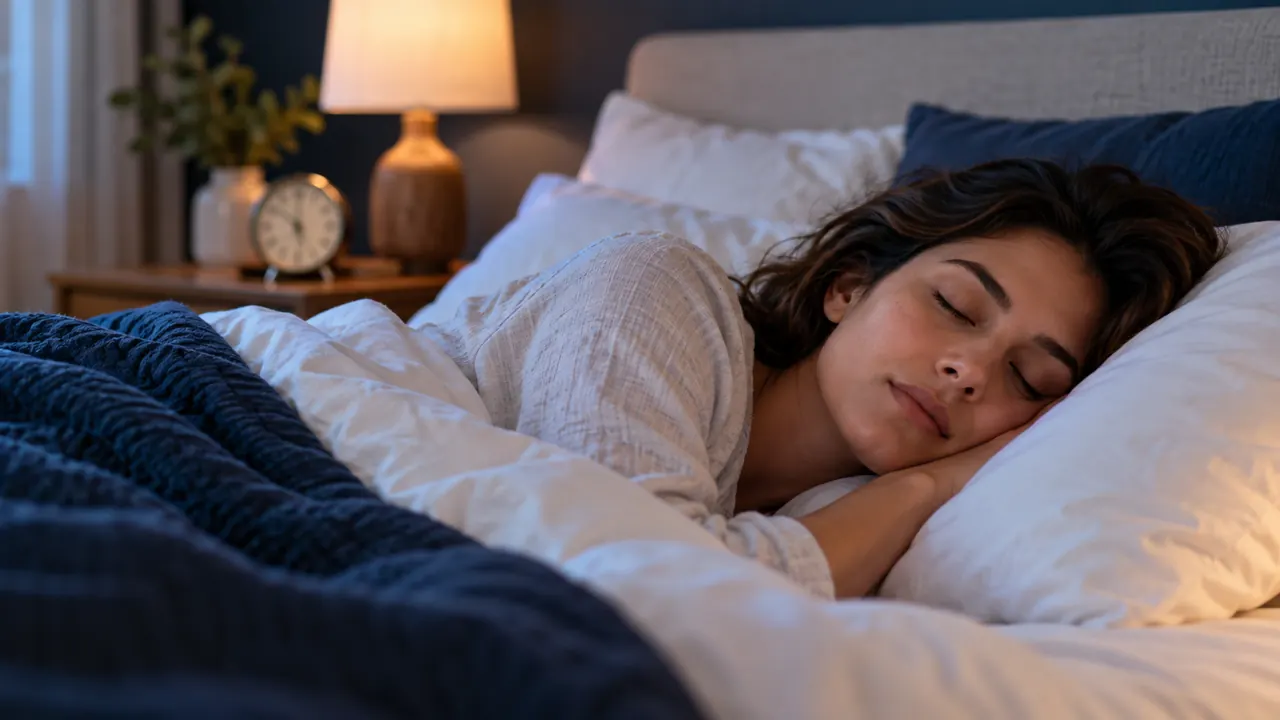
What is a natural short sleeper?
A natural short sleeper is a person who sleeps well below the average for adults for their whole life, wakes without an alarm, feels alert all day and does not fall into long recovery sleeps at the weekend. This is not the same as a person who cuts sleep for work and copes with coffee.
Genetic research has shown that this trait can run in families. Because the group is so small, scientists study single families, and every new finding adds to our understanding of how the brain decides how much sleep is enough.
The DEC2 discovery
In 2009, He and colleagues published a study in Science on a mother and daughter who naturally slept about two hours less than normal. They found a change in a gene called DEC2, also known as BHLHE41, which helps control the body clock. When the team put the same change into mice and flies, the animals also slept less.
In 2014, Pellegrino and colleagues in the journal Sleep described a different variant in the same gene in a pair of twins who slept less than their relatives and coped better with a night of sleep deprivation in a lab. Other short sleep genes have been found since, which shows that more than one pathway can shorten sleep.
How rare are short sleepers?
Very rare. Surveys show many adults sleep less than six hours, but almost all of them show signs of sleep loss on formal testing, such as lapses in attention. Studies by Van Dongen and colleagues found that people on restricted sleep felt less sleepy each day while their performance kept falling. This is why feeling fine is a poor test.
If you think you are a short sleeper, ask whether you sleep in on days off, rely on caffeine, nod off in meetings or on the sofa, or feel low or irritable. A yes to any of these suggests you are short on sleep, not short sleeping by design.
Are you really a short sleeper? A simple checklist
- You have slept about the same short length since childhood or early adulthood
- You wake naturally without an alarm and feel refreshed
- You do not catch up on sleep at weekends or on holiday
- You are rarely drowsy in the day, even when sitting still
- Relatives sleep little too
- You stay healthy, with normal mood and focus
Why most people should not copy them
The usual guidance from sleep medicine bodies is that adults need seven or more hours, and the National Sleep Foundation range is 7 to 9 hours. Long term short sleep is linked with weight gain, high blood pressure, low mood and more accidents. A rare gene variant does not change these risks for the rest of the population.
Trying to train yourself to sleep less does not work for most people. Banks and Dinges showed that repeated nights of restricted sleep pile up into a debt that harms performance, and people tend not to notice how impaired they have become.
What to do if you sleep little and feel well
If you truly feel good, a doctor can review your sleep pattern and health. A sleep diary for two weeks, and sometimes a sleep study, can confirm that you are not missing a problem such as insomnia or apnoea. Do not use your own case to advise others.
If you suspect you are sleep deprived, use the sleep debt calculator to see what a few more cycles per night could return, and the bedtime calculator to plan a schedule.
What short sleepers teach science
Short sleepers are not a model to copy but a clue. By learning how their brains regulate sleep need, researchers hope to find new treatments for insomnia and for conditions linked to poor sleep. The work is early, and no treatment based on these genes is available for the public.
For now, the practical lesson is that sleep need is partly genetic, and the best guide is your own energy over a few weeks of regular sleep without alarms, such as on a holiday.
Common myths about sleeping less
One myth says successful people sleep four hours. Most claims of that kind are anecdotes, and some of those people later admit they nap, or they were forced to cut back. Another myth says the body adapts to six hours. In experiments, people on six hours a night felt they had adapted, but their reaction times kept worsening over two weeks.
A third myth says you can bank sleep for later. You can add a little extra before a hard stretch, but you cannot store months of lost sleep. The better rule is to protect a steady seven to nine hours as often as you can.
Signs you are cutting sleep too short
- You need an alarm and still struggle to rise
- You feel better only after coffee
- You fall asleep within five minutes of lying down
- You doze when reading, driving or watching TV
- Your mood is flat or irritable
- You catch every cold
A two week test to find your real need
- Choose a two week window with no big events and no alcohol on work nights.
- Go to bed when sleepy, at a time that gives you at least eight hours in bed.
- Wake without an alarm if you safely can.
- Note how long you sleep after the first few days, once the debt is repaid.
- The average of the later days is a good estimate of your real need.
- Use that figure in the sleep hours calculator.
Frequently Asked Questions
What is the DEC2 gene? ›
DEC2, also called BHLHE41, is a gene that helps regulate the body clock. Rare variants have been linked to shorter sleep in some families.
How many people are natural short sleepers? ›
Very few. Most people who sleep under six hours are sleep deprived.
Can I train myself to need less sleep? ›
No. Studies show that repeated sleep restriction builds a debt, even if you stop feeling sleepy.
How do I know if I need more sleep? ›
Look for daytime drowsiness, relying on caffeine, long weekend lie ins and low mood.
How much sleep do most adults need? ›
Seven to nine hours, with seven or more recommended by sleep and medical societies.
Should I see a doctor? ›
Yes if you are tired in the day, snore, stop breathing in sleep or feel unwell despite long sleep.
Written by F.A and last updated on 5 November 2026. Claims are checked against the peer reviewed papers and public health sources listed below, and findings from small or early studies are labelled as such. We follow our editorial policy and explain how times and results are calculated in our methodology. Calculators run in your browser and store nothing. Found an error? Tell us and we will correct it.
Sources
- He Y et al. The transcriptional repressor DEC2 regulates sleep length in mammals. Science 2009
- Pellegrino R et al. A novel BHLHE41 variant is associated with short sleep and resistance to sleep deprivation in humans. Sleep 2014
- Banks S, Dinges DF. Behavioral and physiological consequences of sleep restriction. J Clin Sleep Med 2007
- Van Dongen HPA et al. The cumulative cost of additional wakefulness. Sleep 2003
- Hirshkowitz M et al. National Sleep Foundation's sleep time duration recommendations. Sleep Health 2015
This page gives general information for adults and is not medical advice. If you have ongoing sleep problems, loud snoring, breathing pauses or heavy daytime sleepiness, speak to a doctor. Times and results are estimates.